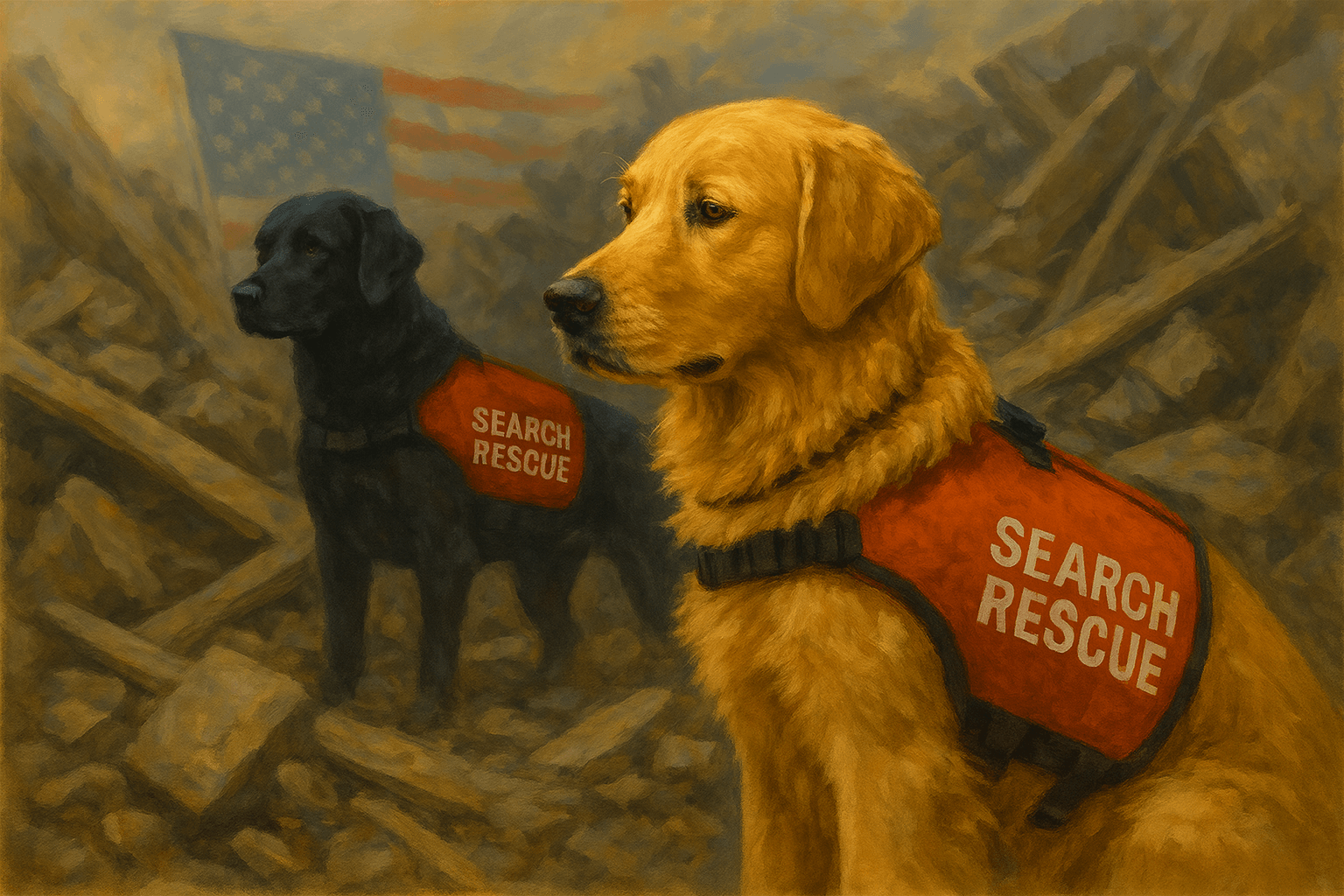
When disaster strikes, heroes rush in. Some wear helmets, some carry ropes, and some… wear fur. 🐾 Search and Rescue (SAR) dogs are the silent heroes who race into collapsed buildings, trek through forests, or bound across avalanche zones to find people in need. Their noses save lives, their loyalty inspires us, and their bravery is unmatched.
But here’s a thought: who’s keeping them safe while they’re busy saving us?
What Search and Rescue Dogs Do: Training and Requirements
Becoming a search and rescue dog isn’t as simple as chasing a tennis ball (though that’s where it usually starts). These working dogs go through months—sometimes years—of specialized canine training before they’re ready to deploy on rescue missions. They must:
- Master sharp obedience skills: Instant recall and focus, even in chaotic disaster environments
- Develop advanced scent detection abilities: Detecting human scent across water, rubble, snow, or dense forest conditions
- Maintain composure under extreme pressure: Sirens, helicopters, shouting crowds, or unstable ground mustn’t rattle them
- Build exceptional physical endurance: Some search operations last hours or even days, in all weather conditions
- Form strong handler-dog partnerships: The dog and handler need total trust in one another, like two halves of a single unit
In short: these canine first responders are athletes, detectives, and emergency personnel rolled into one.
The Dangers Search and Rescue Dogs Face
With such demanding work comes serious risk. SAR dogs are often the first to go where humans cannot safely enter. That means they encounter:
- Handler separation risks: Dogs can race far ahead while following a scent trail and lose visual contact with their handler
- Physical injury hazards: Sharp rubble, collapsing structures, freezing water, and jagged terrain can cause wounds, fractures, or exhaustion
- Environmental dangers: Smoke inhalation, avalanche snow, fire exposure, toxic debris, or extreme heat all pose life-threatening dangers
- Entrapment scenarios: In avalanches or building collapses, even the rescuer can become the one in need of rescue
- Overexertion risks: Dogs will keep searching until they collapse if handlers don’t intervene—their drive to serve is that strong
It’s inspiring, but also heartbreaking: these dogs give everything, without hesitation, for the sake of human lives.
Case Study: Bretagne, the 9/11 Search and Rescue Dog
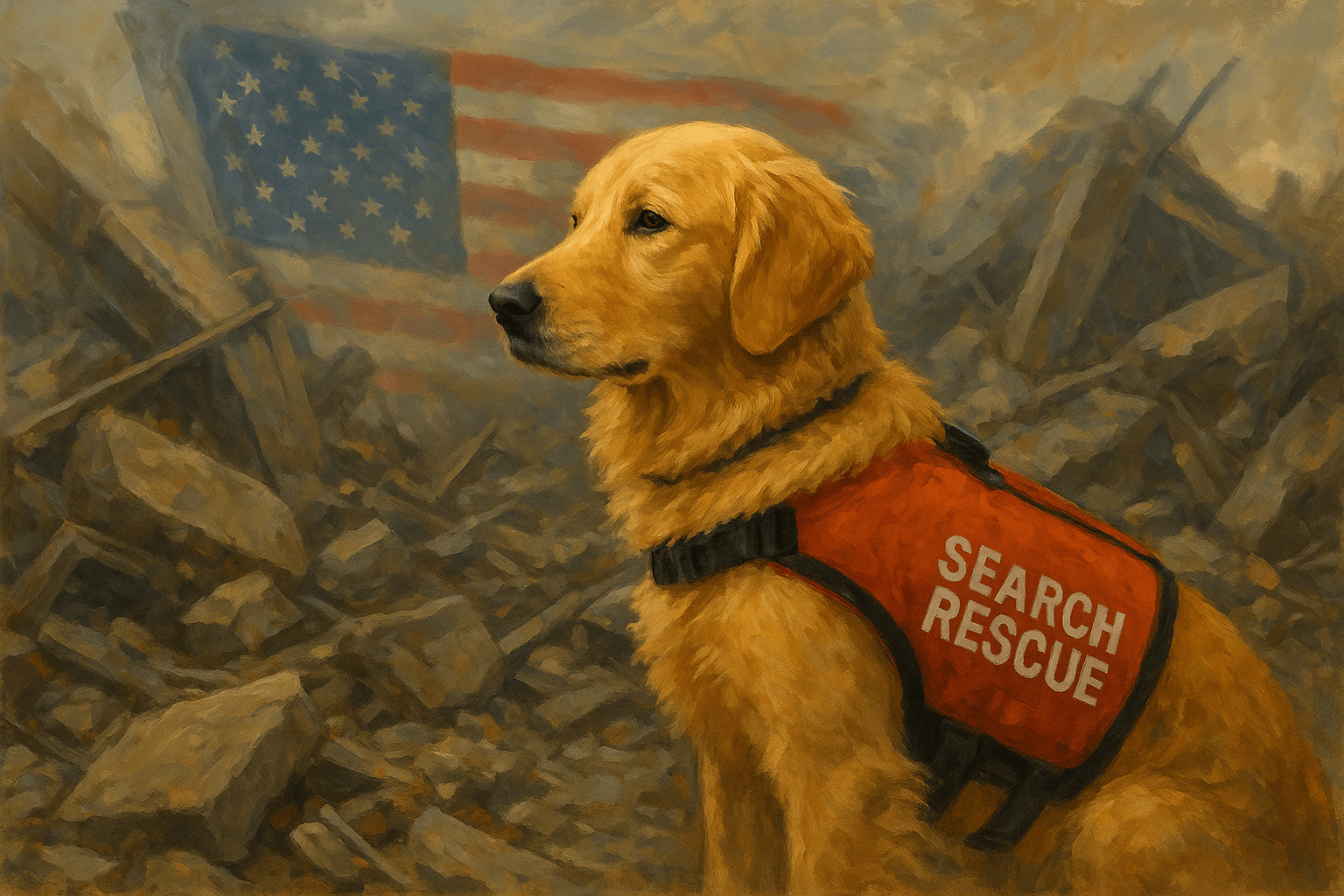
One of the most famous SAR dogs in history was Bretagne (pronounced Brittany), a Golden Retriever who worked tirelessly at Ground Zero after the September 11 terrorist attacks. For days on end, she searched through dangerous rubble, sharp metal, and unstable debris, locating survivors and comforting exhausted firefighters.
Bretagne’s handler often spoke about how she would disappear into dust clouds and twisted steel, always focused on her search mission—but there was always the fear that she might not come back out.
Imagine if dogs like Bretagne had the added protection of GPS tracking technology. In a disaster zone where every second counts, knowing exactly where she was could have given her handler peace of mind and made sure no time was wasted if she became trapped.
Bretagne’s story is just one example, but it reflects the same truth for every SAR dog: they risk their lives without hesitation, and they deserve every safeguard we can give them.
How GPS Tracking Technology Protects SAR Dogs
This is where modern GPS collar technology steps in. A GPS tracking collar is more than a gadget; it’s a critical safety tool for working dogs.
Key benefits of GPS collars for search and rescue dogs:
- Real-time location tracking: If a dog gets too far ahead or separated during a mission, handlers can track their precise position in seconds
- Faster emergency response: In time-critical rescue situations, no energy is wasted searching for the rescuer instead of the victim
- Operational peace of mind: Handlers can focus fully on the rescue mission, knowing they won’t lose their canine partner
The Double Rescue Effect in SAR Operations
Every SAR mission really has two rescues happening simultaneously:
- The person in distress who needs to be found
- The dog risking everything to find them
We expect SAR dogs to find us when we’re lost—shouldn’t we make sure we can always find them too?
Why Working Dogs Need Safety Technology
SAR dogs aren’t superheroes because of gadgets—their power comes from training, instinct, and heart. But just as human first responders wear helmets, two-way radios, and safety harnesses, dogs deserve protective equipment too. A GPS collar isn’t about questioning their skills or abilities. It’s about respecting their courage enough to give them technological backup.
Conclusion: Protecting Our Four-Legged First Responders
SAR dogs risk everything for us. Outfitting them with GPS tracking collars is the least we can do to keep them safe while they save lives. Because while their mission is to bring others home… they deserve to come home too. ❤️
Frequently Asked Questions About Search and Rescue Dogs
What is a Search and Rescue (SAR) dog?
A SAR dog is a highly trained canine that assists in finding missing or trapped people during natural disasters, avalanches, wilderness searches, or urban disaster situations like collapsed buildings.
What kind of training do SAR dogs go through?
They undergo months or years of specialized training in obedience, scent detection, physical endurance, handler teamwork, and maintaining focus in stressful, chaotic emergency environments.
What risks do SAR dogs face during rescue missions?
SAR dogs face separation from handlers, physical injury from rubble and debris, environmental hazards like smoke or extreme temperatures, potential entrapment, and overwork from their strong instinctual drive to search.
Why should SAR dogs wear GPS collars?
GPS collars provide real-time location updates, help handlers quickly locate their dogs if separated during operations, and ensure no time is wasted in emergencies—giving both safety and peace of mind to rescue teams.
How does GPS tracking help in rescue missions?
It allows handlers to focus fully on the primary rescue mission, ensures faster response times by avoiding wasted search time, and adds a critical safety layer for the dogs themselves.
What is the “Double Rescue Effect”?
Every SAR mission involves saving both the person in distress and protecting the dog risking its life. GPS tracking collars help ensure the dog can be quickly located and rescued if needed during dangerous operations.